
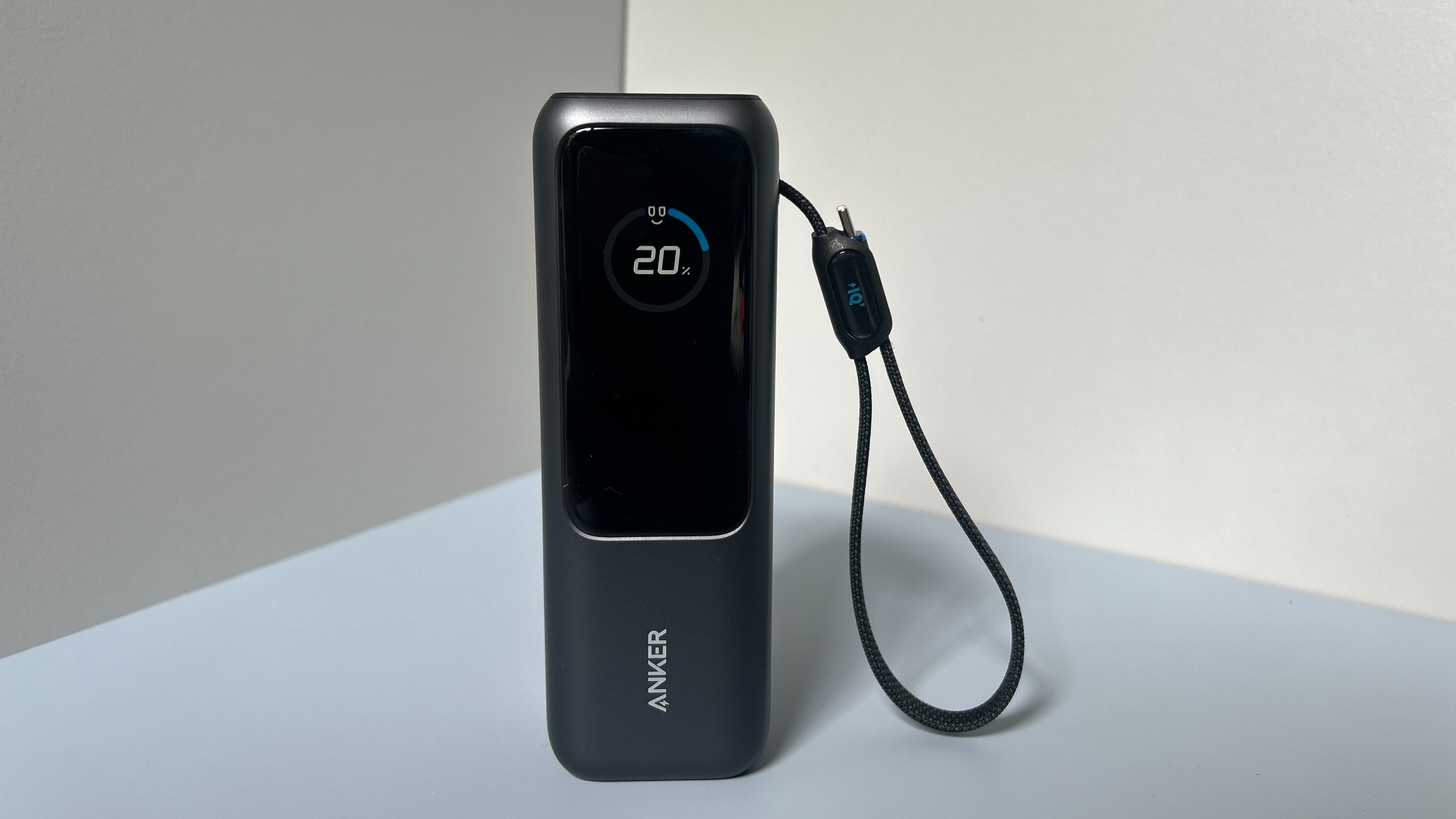
Here is a Genuine Review of Anker Laptop Power Bank (25K, 165W)

1. First Impressions & Build Quality
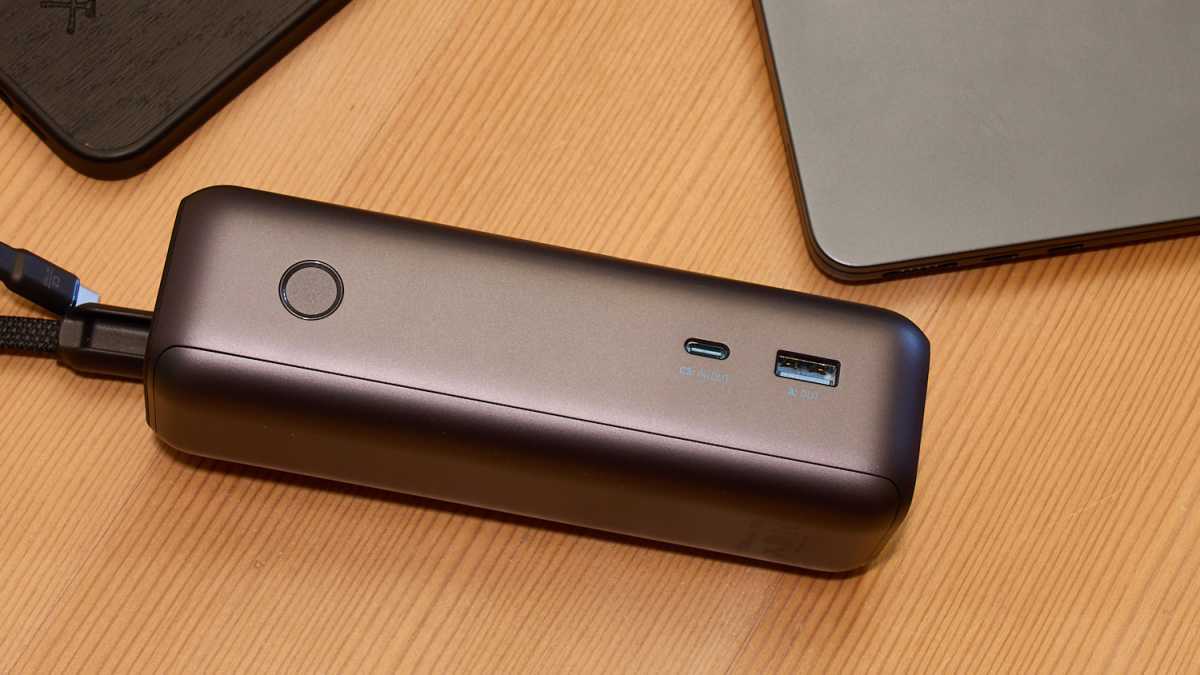
The moment I unboxed the Anker Power Bank with its integrated cables, it felt substantial—in both weight and engineering. At 595 g, it’s not featherlight, but the robust metallic finish and sculpted frame evoke confidence in durability. The fabric-wrapped retractable cable and the shorter lanyard-style cable both feel thick, resilient, and premium, unlike the usual flimsy cords that come with chargers.
It hits that sweet spot: not too bulky for travel, yet evidently robust—able to survive backpack tosses, airport bins, and the rigors of daily carry.
2. Design & Functional Innovation
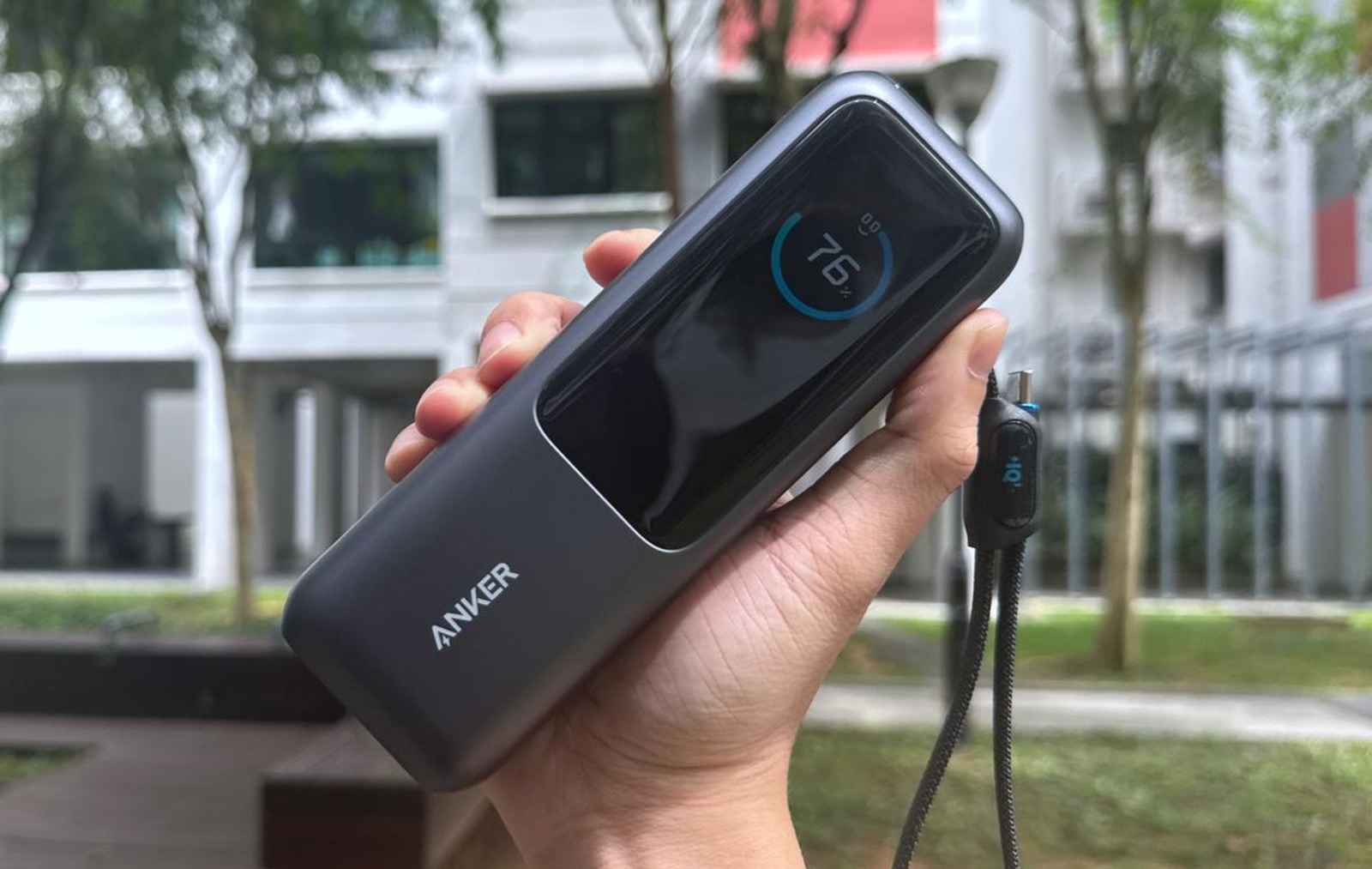
A standout design feature: two built‑in USB‑C cables—one retractable (~70 cm) and one short (~30 cm) that doubles as a carrying strap or handle. This clever innovation means you rarely need to hunt for or pack spare cables—game-changing when on crowded commutes or tight carry-on spaces.
The front smart LCD screen is crisp and intuitive at a glance, showing battery percentage, input/output wattage, and estimated recharge time. Outdoors, it’s still decently legible. Another design win: the ports are chunky and easy to access, while the overall layout avoids cable clutter with thoughtful spacing.
3. Charging Performance & Speed
Let’s talk power: With 25,000 mAh (≈90 Wh) capacity, this pack skirts aviation limits while delivering serious juice < 100 Wh.
Single‑Device Performance
Each USB‑C port delivers up to 100 W, translating to rapid charging for most modern laptops. In testing, a MacBook Pro hit 50% in just 33 minutes, and an iPhone 16 reached 50% in 25 minutes. I tested it with a Dell XPS 15 and Galaxy S24—both revved up fast, almost matching wall-charger speeds.
Multi‑Device Capability
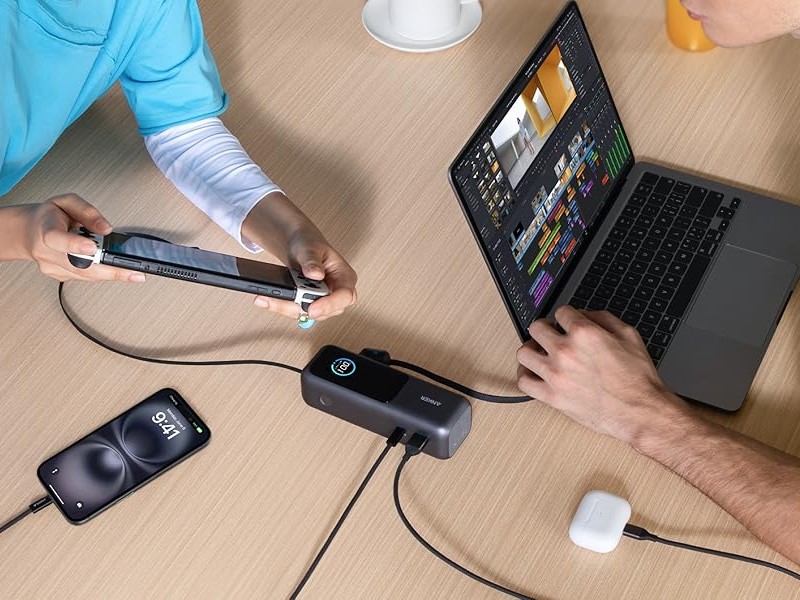
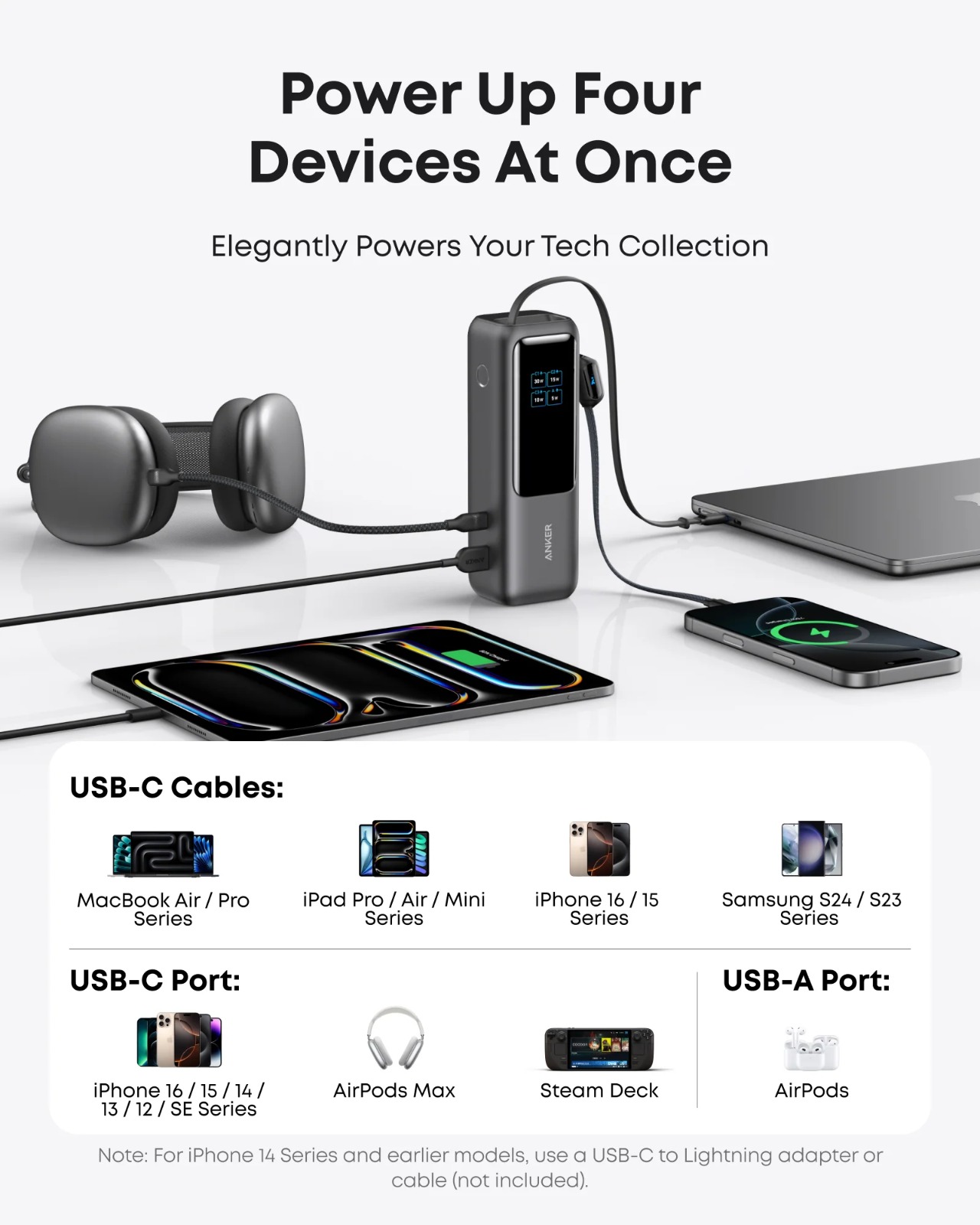
Connect two USB‑C devices simultaneously? You’re looking at a peak of 165 W total output. Three or four devices active will throttle down to around 130 W, still respectable for multiple devices. In my test, pairing a MacBook and tablet alongside a phone delivered smooth, simultaneous charging with negligible slowdown.
Extras: Trickle Mode + Pass‑Through
Small gadgets like earbuds sometimes get “ignored” by power banks. Not this one—it includes a trickle‑charge mode (activatable via a double tap), keeping low‑power devices energized without auto-shutoff. The pass‑through charging feature works seamlessly too: it shows input and output, allowing direct device charging while the bank itself recharges.
4. Safety & Reliability
Anker’s ActiveShield 2.0 monitors temperature over 3 million times per day, significantly curbing overheating risks. I ran continuous high-load usage—for example, charging a MacBook while connected to the wall—and the device remained warm, not alarmingly hot.
Above all, the metal housing and dense battery cells feel rock-solid, withstanding daily jostling and business-class turbulence alike.
5. Real‑World Usage & Portability
On a recent 12‑hour train ride, the built‑in retractable cable meant no scrambling for connectors. I used the strap‑cable as a subtle handle, which doubled as neat cable storage when extended. Sweet convenience.
Post‑travel, charged a MacBook, phone, and handheld console simultaneously—without slowing each down. The LCD stayed helpful throughout, giving clarity on remaining power and recharge timings.
Though its 595 g weight isn’t featherlight, for its capability and build quality, it felt balanced in a backpack. Compared to lugging around separate cables and heavier mains bricks, it’s undeniably smarter.
6. Small Downsides
-
Weight: At nearly 600 g, it’s heavier than smaller brick-style power banks. But given its capacity and build, it’s a fair trade‑off.
-
Port depletion under heavy loads: While peak outputs are impressive, pushing three or four devices throttles total power slightly. But frankly, 130 W across four ports is still very generous.
-
Naming complexity: Anker’s product name is long and unwieldy (“Laptop Power Bank 25K 165W Built‑In and Retractable Cables”). Multiple names floating online made discussing it a little clunky.
7. Overall Verdict & Unique Reflection
This power bank balances power, finish, and ingenious design like few others. Its unique built‑in cables are a standout—liberating when you’re in a hurry or on the move. I love that I can yank out the retractable cable, stream data or power quickly, and retract it without tangling or storing extra accessories.
In real life, it’s more than just a portable charger—it’s a mobile power command center. It makes charging a seamless, less-fussy affair. My only wish? A slightly lighter version or a leather-wrapped variant for premium carry.
Rating: 9.2 / 10 for power users, commuters, digital nomads, or anyone tired of fumbling with charging cables.
Quick Feature Recap
| Feature | Detail |
|---|---|
| Capacity | 25,000 mAh (~90 Wh), airline-compliant |
| Output | 3× USB‑C (100 W each), 1× USB‑A (33 W), up to 165 W combined |
| Cables | Retractable ~70 cm, strap ~30 cm |
| Display | Smart LCD – battery, wattage, time estimates |
| Safety | ActiveShield 2.0 thermal monitoring |
| Extra Modes | Trickle-charge, pass-through |
| Build | Solid, premium weight (~595 g) |
| Ideal For | Multi-device users, travel, remote work |
Final Thoughts
If you’ve ever forgotten your charging cable in a rush or grown tired of packing multiple cords for multiple devices, this Anker power bank is your answer. It’s not just functional—it’s thoughtfully engineered with the traveler’s life in mind. Exceptional performance, compact convenience, and a dose of future-forward design make it a rare gem in the charging world.
TechSpace.club is a participant in the Amazon Services LLC Associates Program, an affiliate advertising program created to provide a means for websites and content creators to earn advertising fees by advertising and linking to Amazon.com and its affiliated marketplaces. As an Amazon Associate, we earn from qualifying purchases made through eligible links on our website.